
One of the most important parts of keeping a healthy reptile is maintaining the proper temperature. Reptiles are ecto-thermic, meaning that their body temperature is influenced by the temperature of their environment. They do not have the ability to maintain a warm body the way that mammals do. In order to digest food and perform other metabolic functions, reptiles and amphibians need to get their bodies to their ideal temperature.

However, this does not mean that all reptiles need to be kept HOT at all times. It means that reptile keepers must know the temperature requirements of their species and provide an environment that fits those needs. Some reptiles can thrive in cooler environments, while others require intense heat in order to stay healthy.


The first step to creating the correct habitat for a pet reptile is researching the needs of the species and understanding how to provide it. Next, there are many different product options for providing heat in a reptile habitat. There may be many different items or combinations of items that can work, so understanding what each product provides is important in making the right decision.
A Reptile Habitat should include a Thermal Gradient – an environment with different temperature zones that allows the animal to thermoregulate as they would in nature. In a long, horizontal habitat, the “warm side” and “cool side” are generally established.

In a vertically oriented habitat, the “warm side” may be near the top of the habitat while the “cool side” is near the bottom.

In Reptile Habitat heating, there are many different types of temperatures that may be monitored and controlled.
Ambienttemperature simply refers to the current air temperature. There are many different factors that can influence ambient temperature such as type of enclosure, room temperature, ventilation, etc…
Surface temperature refers to the temperature of the surface of an item in a terrarium. Rocks, branches, substrate, basking docks, and other items may gather heat and become hotter than the ambient (air) temperature. Reptiles will often use these items with higher surface temperatures to thermoregulate.

Baskingtemperatures refer to the hottest air temperature in the tank and usually occur directly under a heat lamp or basking lamp. Many reptiles like to climb to bask, taking full advantage of cage furniture and basking lamps.

Belly Heat refers to heat that a reptile may rest its “belly” on to directly affect body temperature and is thought to aid in digestion of large meals (ie. for snakes and large lizards).
A Nighttime Temperature Drop is a natural occurrence in nature where temperatures drop lower at night than they are during the day. Many reptile keepers try to simulate this natural fluctuation by allowing terrarium temperatures to drop a few degrees at night.
There are many different heating elements available to help create, maintain, and monitor the proper thermal gradients, such as:
- Heat Lamps
- Ceramic Heat Emitters
- Under Tank Heaters
- Heat Cables
- Thermometers
- Thermostats
- And more
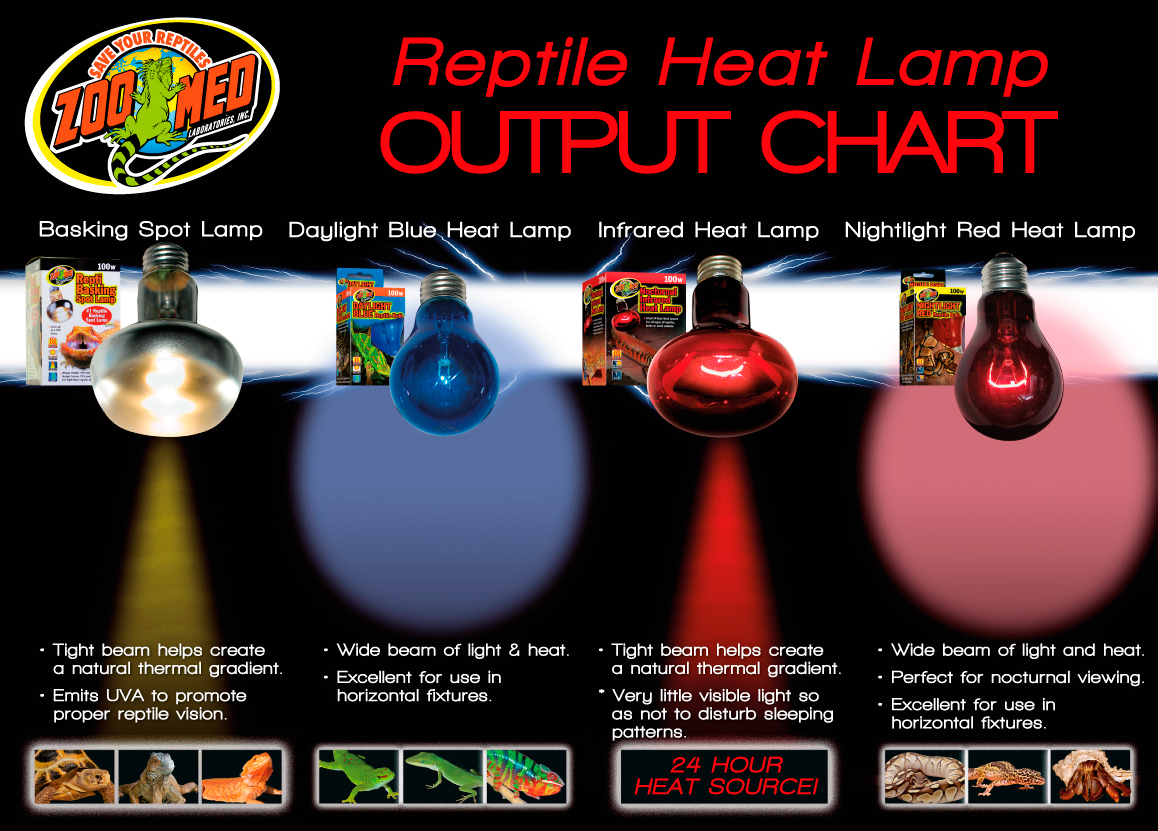
When setting up heat on a reptile habitat, here are some things to remember:
- Ambient room temperature can affect the temperature in a terrarium. In a warm room, few or small heating elements will be needed to maintain terrarium temperatures. The opposite applies to cool rooms where more heat may be required to achieve a proper thermal gradient.
- Natural temperature fluctuations may occur throughout the day or over the seasons and can also affect enclosures. Regularly checking temperatures is important so that adjustments to heating elements can be made when necessary.
- The type of enclosure used will likely affect how efficient heating elements are. A solid enclosure, such as a glass tank, will retain more heat than an open air screen cage like a Reptibreeze. Maintaining higher temperatures may be easier in a solid enclosure than in an open air type habitat.